
Embark on a journey through the intricacies of Prenuptial Agreements Explained: Pros and Cons, delving into the advantages and disadvantages that come with this legal arrangement. Get ready to explore the nuances of prenups in a way that sheds light on their significance in modern relationships.
As we navigate through the realm of prenuptial agreements, we uncover the legal implications, emotional considerations, and financial ramifications that play a pivotal role in shaping couples' decisions.
What are Prenuptial Agreements?
Prenuptial agreements, commonly known as prenups, are legal documents created by individuals before marriage to establish the financial rights and responsibilities of each spouse in the event of a divorce or death. These agreements Artikel how assets, debts, and other financial matters will be handled during and after the marriage.
Purpose and Legal Implications
Prenuptial agreements serve to protect the assets of each party and clarify expectations regarding financial matters. To be considered valid, a prenup must be in writing and signed voluntarily by both parties. Full disclosure of assets and liabilities is essential to ensure fairness and prevent challenges to the agreement's validity.
- Common Provisions: Prenuptial agreements often include provisions related to the division of property, spousal support, inheritance rights, and any other financial aspects unique to the couple's situation.
- Financial Transparency: Both parties must fully disclose their financial information to ensure that the agreement is fair and enforceable.
- Legal Representation: It is advisable for each party to have their legal representation to understand the terms and implications of the agreement fully.
Differences between Prenuptial and Postnuptial Agreements
While prenuptial agreements are created before marriage, postnuptial agreements are drafted after the couple has already tied the knot. Postnuptial agreements serve a similar purpose in outlining financial rights and responsibilities but are typically used to address changes in circumstances during the marriage, such as a significant increase in wealth or a shift in priorities.
Pros of Prenuptial Agreements
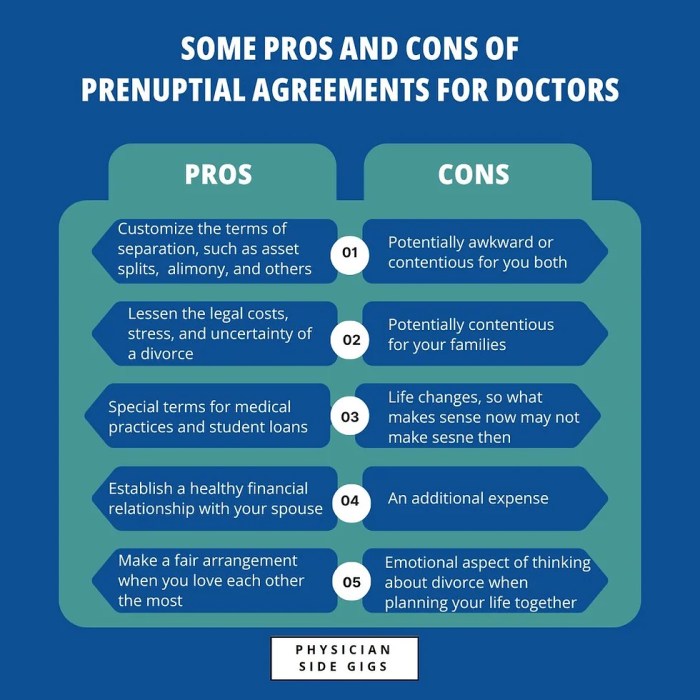
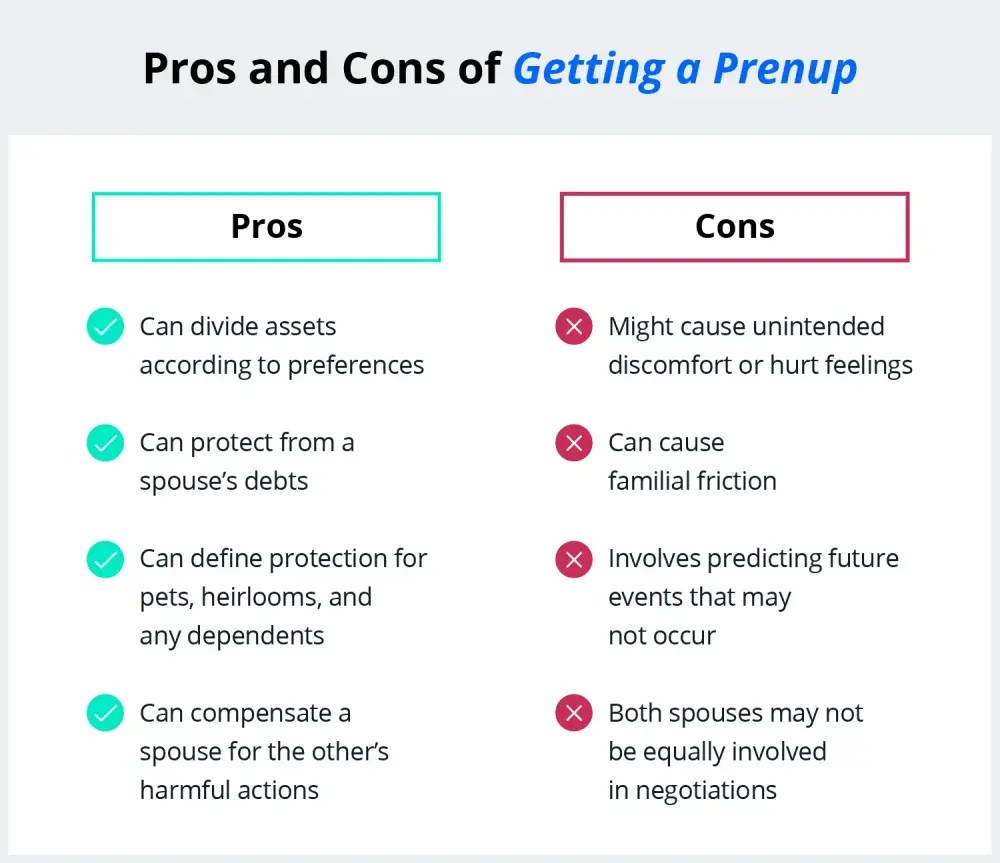
Prenuptial agreements can offer several advantages to couples entering into marriage. These agreements can help protect assets, clarify financial expectations, and potentially save time and money in the event of divorce.
Asset Protection
- Prenups can safeguard assets acquired before marriage, such as inheritances, businesses, or properties, ensuring they remain with the original owner in case of divorce.
- They can Artikel how assets will be divided, preventing disputes and legal battles over property rights.
Financial Clarity
- By detailing each spouse's financial obligations and responsibilities during the marriage, prenuptial agreements can prevent misunderstandings and conflicts related to money matters.
- They can establish guidelines for managing joint finances, budgeting, and handling debts, fostering transparency and trust in the relationship.
Time and Cost Savings
- Having a prenup in place can streamline the divorce process by clearly outlining asset division and spousal support terms, potentially reducing legal fees and lengthy court battles.
- It can expedite the resolution of financial issues, allowing couples to part ways amicably and move forward with their lives more quickly.
Cons of Prenuptial Agreements
When considering a prenuptial agreement, it's important to weigh the disadvantages as well as the benefits. While prenups can provide clarity and protection, they also come with certain drawbacks that couples should be aware of.Prenuptial agreements can sometimes lead to emotional implications and trust issues within a relationship.
The act of proposing a prenup may be seen as a lack of faith in the longevity of the marriage or a lack of trust in one's partner. This can create tension and strain the relationship even before the marriage begins
Impact on Spousal Support
Prenuptial agreements can limit the amount of spousal support or alimony that one party may receive in the event of a divorce. While this can protect assets and finances, it may also leave one spouse financially vulnerable, especially if they have given up career opportunities to support the other spouse or to care for the family.
Unequal Bargaining Power
There is a potential for unequal bargaining power when negotiating prenuptial agreements. One party may have significantly more assets or resources than the other, which can lead to an unfair agreement that favors the wealthier spouse. This imbalance can create resentment and animosity down the line if the marriage ends in divorce.
Legal Considerations
When it comes to prenuptial agreements, there are several legal considerations that need to be taken into account to ensure their validity and enforceability.
Legal Requirements for Validity
In order for a prenuptial agreement to be considered valid, it must meet certain legal requirements. These requirements typically include full financial disclosure from both parties, the agreement must be in writing, and both parties must sign the document voluntarily without any coercion.
State Laws and Enforceability
State laws can have a significant impact on the enforceability of prenuptial agreements. Each state has its own laws regarding the validity of prenups, so it's important to understand the specific requirements in your state to ensure the agreement will hold up in court.
Challenges and Invalidation
There are certain circumstances under which a prenuptial agreement may be challenged or invalidated in court. For example, if one party can prove that they signed the agreement under duress or without full disclosure of the other party's assets, the court may deem the agreement unenforceable.
Scenarios Where Prenups May Not Hold Up
Prenuptial agreements may not hold up in court if they are found to be unconscionable, unfair, or if there was fraud involved in the creation of the agreement. Additionally, if the agreement was not executed properly or if it violates public policy, it may be deemed invalid by the court.
Final Review
In conclusion, Prenuptial Agreements Explained: Pros and Cons offers a comprehensive look at the various facets of prenups, leaving readers with a deeper understanding of the complexities involved. Whether contemplating a prenuptial agreement or simply seeking knowledge on the subject, this exploration serves as a valuable resource.
Commonly Asked Questions
Can a prenuptial agreement be challenged in court?
Yes, under certain circumstances, a prenup may be challenged, especially if it was not executed properly or if one party was coerced into signing it.
Do prenuptial agreements always hold up in court?
While prenups are legally binding documents, there are instances where they may not be upheld in court, such as if they are found to be unconscionable or unfair.
What happens if there are discrepancies between state laws and a prenuptial agreement?
In cases where state laws conflict with the terms of a prenup, the court will typically follow state laws unless there are compelling reasons to deviate from them.