Delving into the aftermath of being charged with a felony, this article sheds light on the intricate legal process that unfolds post-charge. From initial court appearances to plea bargaining and trial processes, the journey is riddled with complexities and pivotal moments.
Legal Process Overview
Upon being charged with a felony, the legal process can be complex and daunting. It involves several key steps from the initial charge to the eventual trial. Understanding these steps and milestones is crucial for navigating the legal system effectively.
1. Arrest and Booking
- After being charged with a felony, the individual is typically arrested by law enforcement and taken into custody.
- They are then booked at the police station, where personal information is recorded, fingerprints are taken, and a mugshot is captured.
- The individual may be held in custody temporarily or released on bail, depending on the severity of the charges.
2. Arraignment
- During the arraignment, the individual is formally informed of the charges against them and asked to enter a plea of guilty, not guilty, or no contest.
- Bail may be set or adjusted during the arraignment, and the court will schedule future court dates.
- It is crucial to have legal representation at this stage to understand the charges and potential consequences.
3. Pre-Trial Proceedings
- Pre-trial proceedings involve discovery, where the prosecution and defense exchange evidence and information related to the case.
- Motions may be filed by either party, such as motions to suppress evidence or dismiss the case.
- Negotiations for plea bargains or alternative resolutions may also occur during this phase.
4. Trial
- If the case goes to trial, both sides present evidence, call witnesses, and make arguments before a judge or jury.
- The prosecution must prove the defendant's guilt beyond a reasonable doubt for a conviction to occur.
- The jury deliberates and reaches a verdict, or the judge issues a verdict in a bench trial.
Initial Court Appearance
During the initial court appearance after being charged with a felony, the accused will appear before a judge to be informed of the charges against them. This is also known as an arraignment.
Rights of the Accused
- The right to be informed of the charges against them.
- The right to legal representation.
- The right to remain silent to avoid self-incrimination.
- The right to request a copy of the criminal complaint.
- The right to request bail or to be released on recognizance.
Role of Legal Representation
Legal representation is crucial during the initial court appearance as the attorney can:
- Advise the accused on their rights and options.
- Negotiate bail conditions on behalf of the accused.
- Request a continuance if more time is needed to prepare a defense.
- Enter a plea of guilty or not guilty on behalf of the accused.
- Begin building a defense strategy for the upcoming trial.
Bail and Pretrial Release
When someone is charged with a felony, one of the crucial aspects they face is the determination of bail and pretrial release. Bail serves as a form of security to ensure the defendant's appearance in court and adherence to the legal process.
Understanding the criteria for setting bail, alternative options for pretrial release, and the impact of bail decisions on defendants is essential in navigating the legal system effectively.
Criteria for Setting Bail
The criteria for setting bail after a felony charge typically involve the severity of the offense, the defendant's criminal history, their ties to the community, and the likelihood of them fleeing before trial. Judges consider these factors to determine an appropriate bail amount that balances public safety with the defendant's rights.
- Severity of the offense plays a significant role in bail decisions. More serious felonies may result in higher bail amounts.
- The defendant's criminal history, especially past convictions or failures to appear in court, can impact the bail amount set.
- Ties to the community, such as employment, family, and property ownership, can demonstrate the defendant's connection and likelihood of appearing in court.
- The risk of flight is also considered, with higher bail amounts for defendants deemed to be a flight risk.
Alternative Options to Bail for Pretrial Release
In some cases, defendants may have alternative options to traditional bail for pretrial release. These alternatives aim to ensure the defendant's appearance in court while addressing specific circumstances that may affect their ability to post bail.
- Own Recognizance (OR) Release:In this option, the defendant is released without posting bail but agrees to appear in court as required.
- Unsecured Bonds:Defendants pledge to pay a specific amount if they fail to appear in court, without having to pay upfront.
- Supervised Release:Defendants are released under supervision, which may include check-ins, drug testing, or other conditions to ensure compliance.
Impact of Bail Decisions on Defendants
The decisions regarding bail can have a significant impact on defendants, affecting their ability to prepare for trial, maintain employment, and care for their families. High bail amounts or inability to pay bail can lead to pretrial detention, resulting in prolonged periods of incarceration before the resolution of the case.
- Defendants with limited financial resources may struggle to afford bail, leading to disparities in the legal system based on economic status.
- Pretrial detention can disrupt the defendant's life, causing challenges in accessing legal counsel, gathering evidence, and maintaining personal relationships.
- The psychological impact of being detained pretrial can be severe, affecting mental health and well-being.
Plea Bargaining
Plea bargaining is a negotiation process between the defendant and the prosecutor where the defendant agrees to plead guilty in exchange for a lesser charge, reduced sentence, or dismissal of certain charges. It is a common practice in the criminal justice system to resolve cases efficiently without going to trial.
Pros and Cons of Plea Bargaining
- Pros:
- Efficiency: Saves time and resources by avoiding lengthy trials.
- Certainty: Provides a guaranteed outcome rather than the uncertainty of a trial verdict.
- Potential for leniency: Defendants may receive a more favorable outcome compared to a trial conviction.
- Cons:
- Potential for injustice: Defendants may feel pressured to accept a plea deal even if they are innocent.
- Lack of transparency: The process is often conducted behind closed doors, raising concerns about fairness.
- Reduction in accountability: Some argue that plea bargaining undermines the accountability of the criminal justice system.
Impact of Plea Bargaining on the Criminal Justice System
Plea bargaining plays a significant role in the criminal justice system by helping to manage caseloads, reduce trial backlogs, and allocate resources effectively. It allows for the swift resolution of cases and can lead to more efficient outcomes. However, some critics argue that the prevalence of plea bargaining may result in defendants waiving their rights to a fair trial and accepting deals that may not fully serve justice.
Overall, plea bargaining is a complex process that continues to shape the dynamics of the criminal justice system.
Trial Process
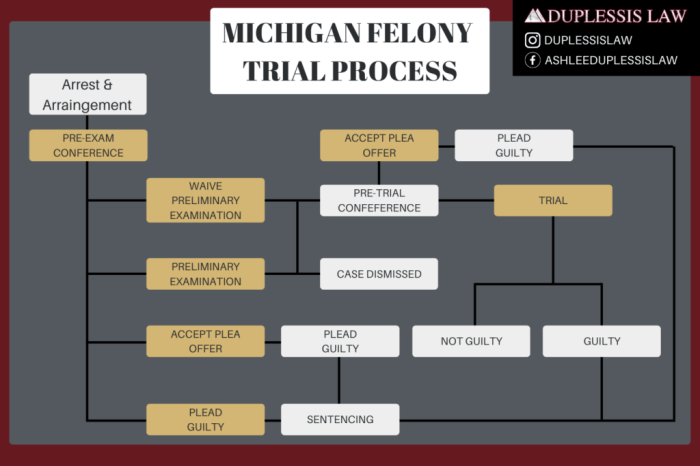
After the pretrial phase, the case moves on to the trial process where the prosecution and defense present their arguments and evidence in front of a judge and, in many cases, a jury.
Stages of a Criminal Trial
- Opening Statements: Both sides present an overview of their case.
- Presentation of Evidence: Witnesses are called, and evidence is submitted.
- Closing Arguments: Both sides summarize their case and try to persuade the judge or jury.
- Jury Deliberation: If there is a jury, they will discuss and reach a verdict.
- Verdict: The judge or jury announces whether the defendant is guilty or not guilty.
Roles of the Prosecution, Defense, and Judge
- Prosecution:Represents the government and presents the case against the defendant.
- Defense:Represents the defendant and challenges the prosecution's case.
- Judge:Ensures a fair trial, rules on legal issues, and decides on sentencing if the defendant is found guilty.
Jury Selection Process
- During the jury selection process, called voir dire, potential jurors are questioned by both sides to ensure they can be impartial.
- The prosecution and defense can dismiss potential jurors for specific reasons through peremptory challenges.
- The final jury is then selected, and they play a crucial role in determining the defendant's guilt or innocence.
Last Point
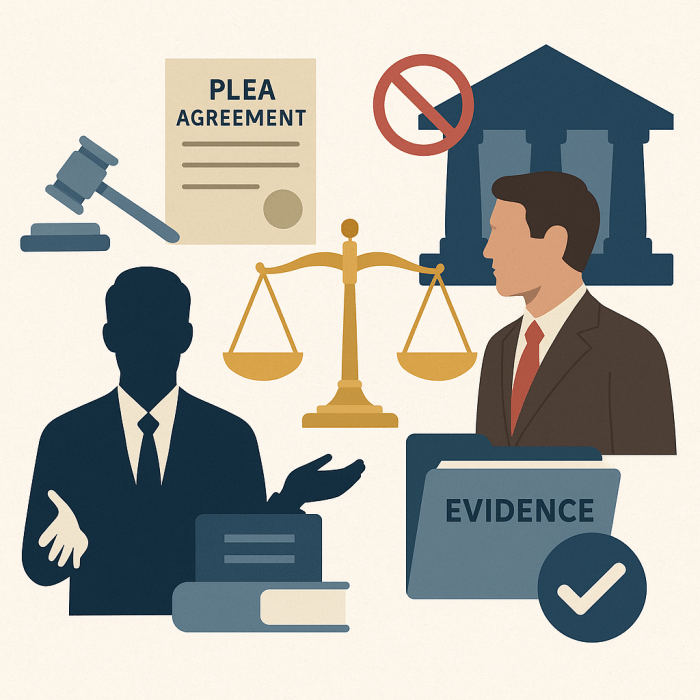
In conclusion, navigating the aftermath of a felony charge is a multifaceted journey that requires understanding, preparation, and strategic decision-making. As individuals traverse the legal landscape, each step holds significant implications that shape their future outcomes.
Key Questions Answered
What happens if I can't afford bail?
If you can't afford bail, you may explore alternative options such as a bail bond or requesting a bail reduction from the court.
Can I change my plea after entering into a plea bargain?
Typically, you cannot change your plea after entering into a plea bargain unless there are exceptional circumstances.
How long does a felony trial usually last?
The duration of a felony trial can vary significantly depending on the complexity of the case, but it can last from a few days to several weeks.
What are the consequences of violating the terms of pretrial release?
Violating the terms of pretrial release can lead to re-arrest, increased bail amounts, or additional criminal charges.